
If your Tupperware storage containers feel like one of the most frustrating areas in your kitchen, you’re not alone. Lids get separated, containers stack poorly, and what should be simple ends up taking more time than it should.
With the right setup, this is an easy system to fix.
These tupperware storage solutions are designed to make containers and lids easy to access, simple to maintain, and functional for everyday use. From stackable options to drawer-based systems, each approach helps maximize your space while keeping everything in order.
The goal isn’t just to organize—it’s to create a system that actually works long term, so your kitchen feels easier to use every day.

Affiliate Disclosure:
We want to be transparent and inform our users that some of the links on this website are affiliate links. This means that if you make a purchase through these links, we may earn a commission, at no additional cost to you. We only recommend products or services that we believe will add value to our readers. Your support through these affiliate links helps us maintain and improve our content. Thank you for your support!
BENEFITS OF TUPPERWARE STORAGE
When your food storage containers are organized well, the entire kitchen becomes easier to use.
Instead of digging through mismatched lids and unstable stacks, everything is easy to find and simple to put away. A clear system removes the daily friction that usually comes with this space.
It also helps your cabinets function better. When containers are stored efficiently, you’re able to use the space more intentionally—especially important in smaller kitchens where every inch matters.
Another benefit is visibility. When you can see exactly what you have, you’re less likely to repurchase items you already own, and more likely to actually use what’s in your kitchen.
It’s a small shift, but one that makes a noticeable difference in how your kitchen works day to day.

TUPPERWARE STORAGE STATS
Before diving into the clever Tupperware storage solutions, let’s take a look at some eye-opening statistics that highlight the need for better Tupperware organization:
- Over 40% of people admit to having a disorganized Tupperware cabinet.
- The average person spends 10 minutes per week searching for a matching Tupperware lid.
- 25% of people have repurchased Tupperware because they couldn’t find the original one.
- 60% of people feel frustrated or stressed when they can’t find a matching Tupperware lid.
- 75% of people say that an organized kitchen makes them feel more at peace and in control.
These statistics emphasize the importance of Tupperware organization. By implementing these clever hacks, you can join the majority of people who enjoy a more organized and stress-free kitchen experience.
ASSESSING YOUR TUPPERWARE COLLECTION
Before setting up any system, it’s important to understand what you’re working with.
Start by pulling all of your containers and lids into one place. This gives you a clear view of what you actually have and where things tend to break down. As you sort, separate by size and type, and remove anything that’s damaged, missing a match, or no longer being used.
From there, take a moment to notice patterns. Which containers do you reach for most often? What sizes work best for your routine? Are there limitations in your cabinet or drawer space?
This step is simple, but it makes the biggest difference. When you know what you use and how your space functions, it becomes much easier to create a system that actually works.
ADJUSTABLE DRAWER DIVIDERS
One of the most effective ways to organize food storage containers is by using adjustable drawer dividers.
They allow you to create defined sections within the drawer, so containers and lids each have a clear place. Because they’re adjustable, the layout can be tailored to fit your space and the sizes you use most often.
This keeps everything contained, easy to see, and simple to maintain. Instead of shifting stacks or overcrowded cabinets, the drawer stays structured and works the way it’s supposed to.
We used these drawer dividers to get this drawer in order.
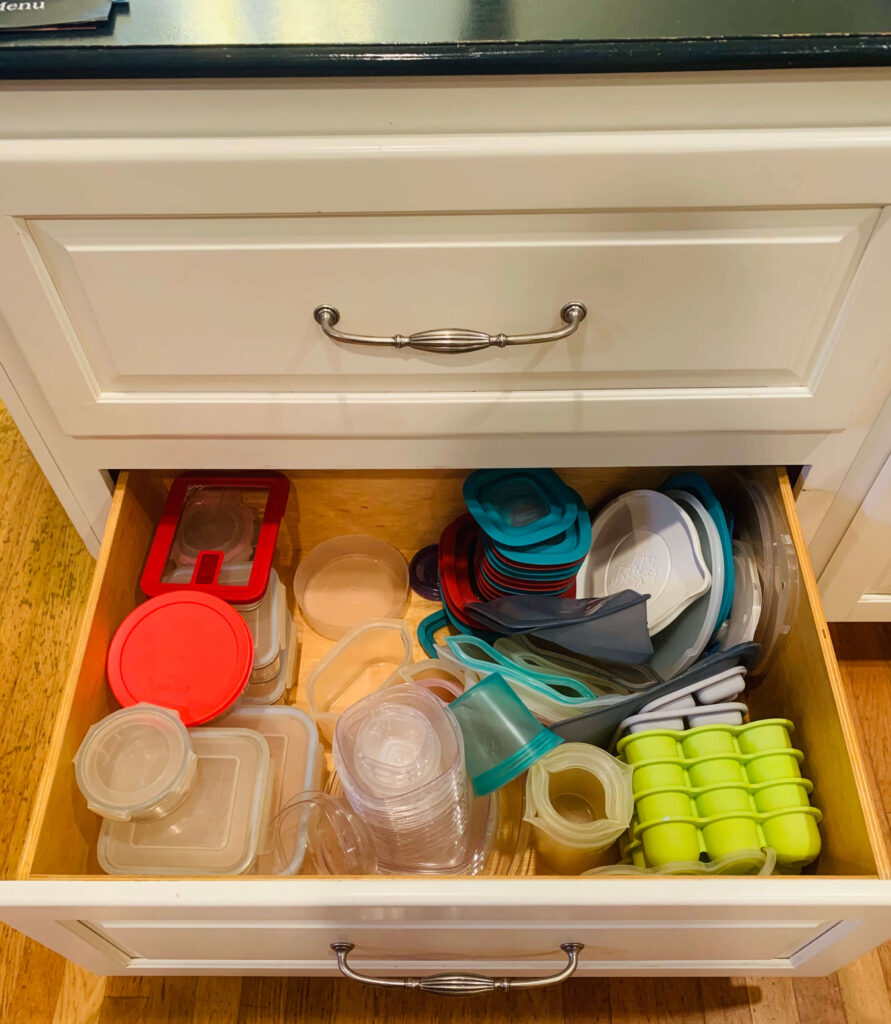
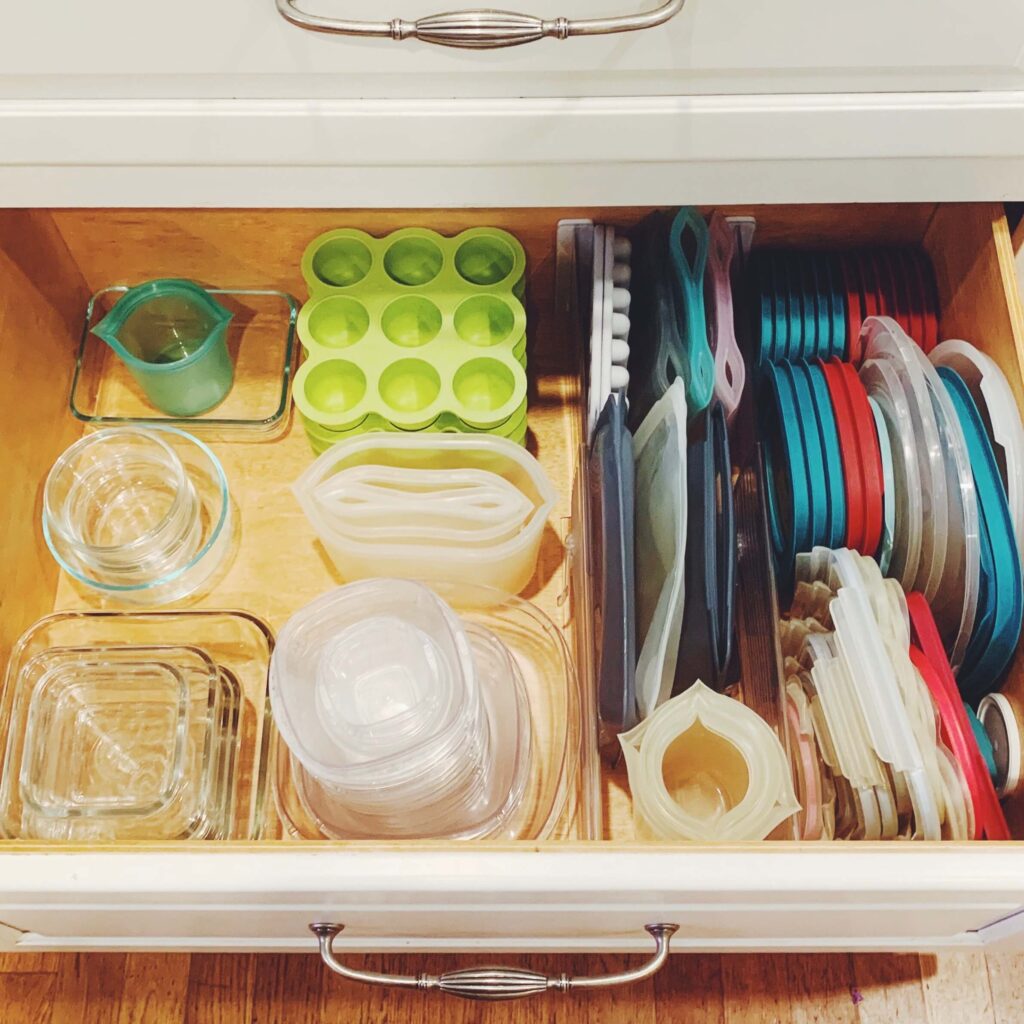
Using these drawer organizers, we were able to keep all the lids together on one side while keeping the matching bottom on the other side. The bottoms were stored by type starting with the larger containers and the smaller ones sitting inside of them, optimizing the height of the drawer.
Storing the lids vertically maximized space and made everything visible. They were stored by type and then size. The lids were kept in one section while the reusable food storage bags were kept in their own compartment. Dedicated compartments keep areas neat and tidy.
LID AND CONTAINER ORGANIZERS
Another great way to keep your Tupperware organized is with lid and container organizers. These products come in a variety of shapes and sizes, but the basic idea is the same: they provide a designated spot for each container and lid, making it easy to find what you need.
Some organizers even come with adjustable dividers, so you can customize the size of each section to fit your specific containers. With a lid and container organizer, you’ll never have to dig through a messy cabinet again.
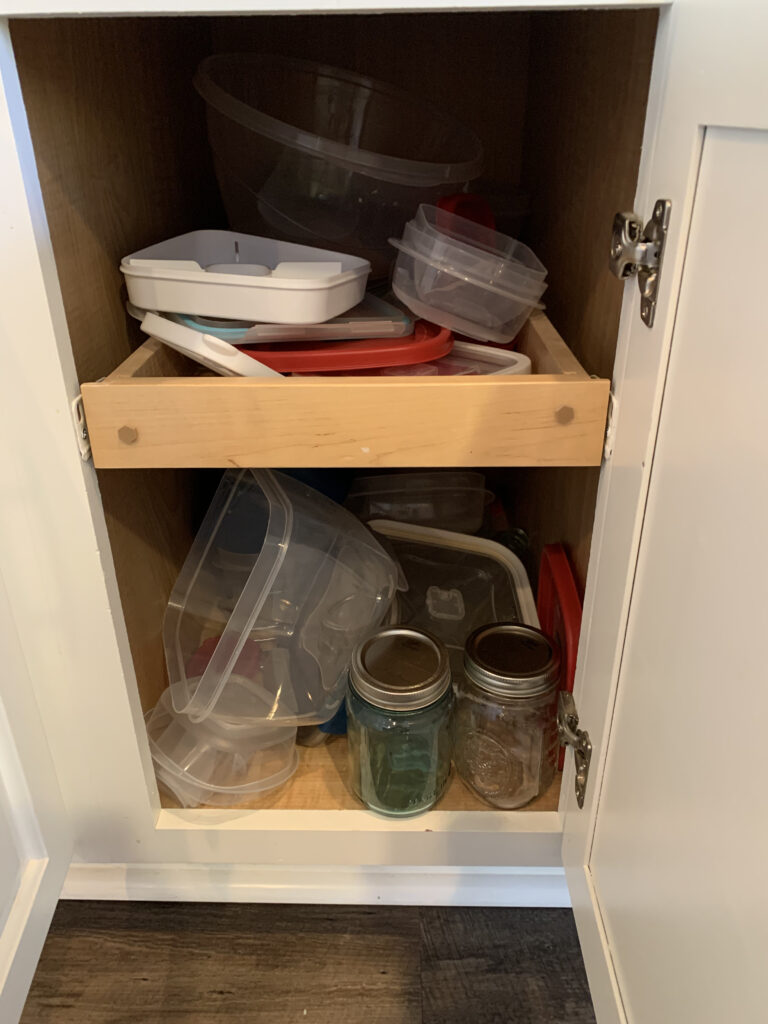
This cabinet had lids and bottoms scattered as well. We relocated the Tupperware to another cabinet which made sense because of the size and number of containers. They had been in multiple locations making it a challenge to find what is needed.
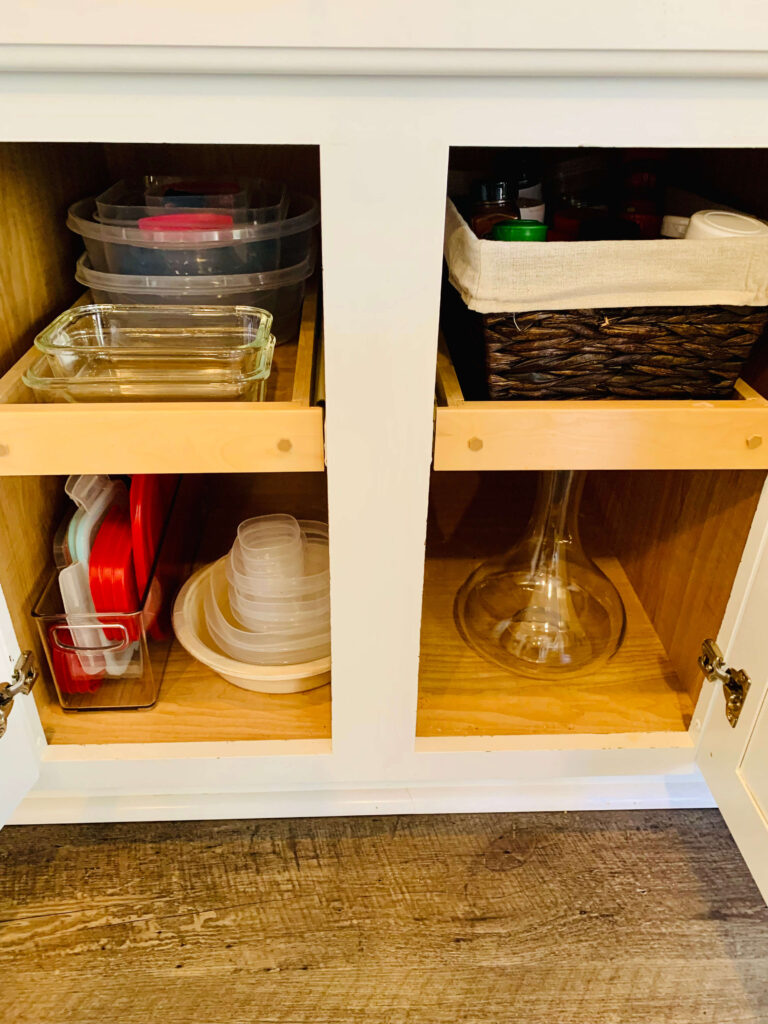
We moved them to a cabinet where the larger bottoms could stack neatly together with the lids in a bin on the bottom. This bin is slim and deep making it a perfect fit for organizing Tupperware lids.
This bin also acts like a sliding drawer allowing you to get to them easily without having to search the back of the cabinet.
NO PRODUCT AT ALL
Yes, you read that right. Getting drawer dividers or bins isn’t a requirement for organizing Tupperware. A perfect example is this cabinet. Lids and bottoms were all over these shelves.
We took it all out making sure everything had a lid and put it all back together.
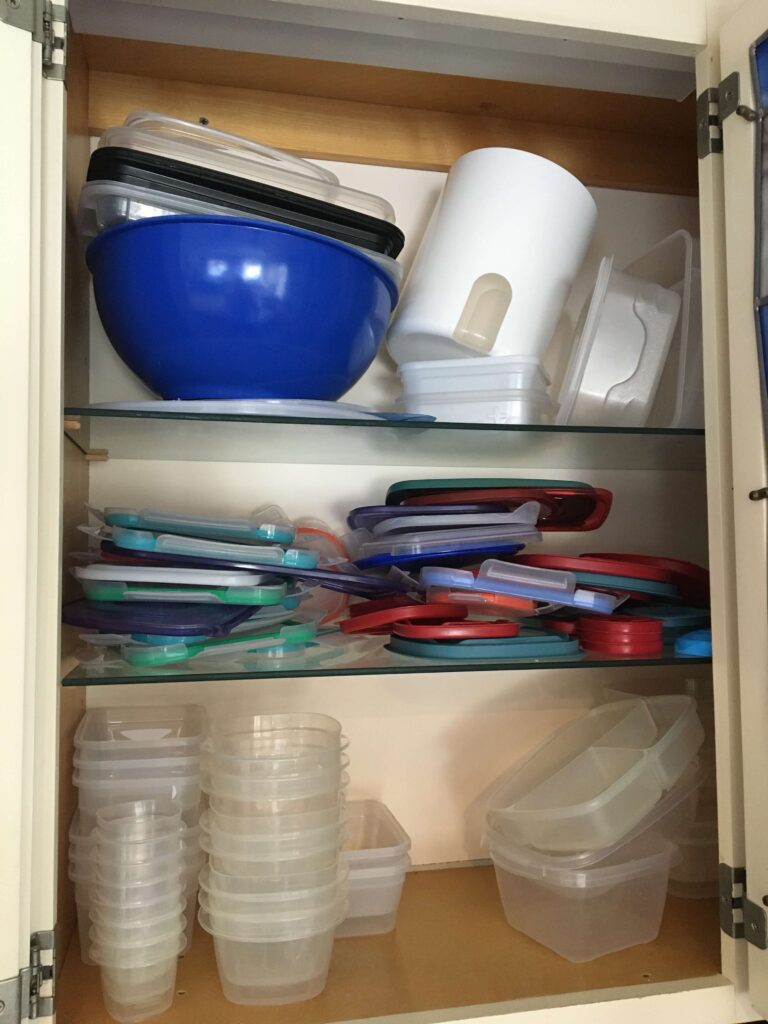
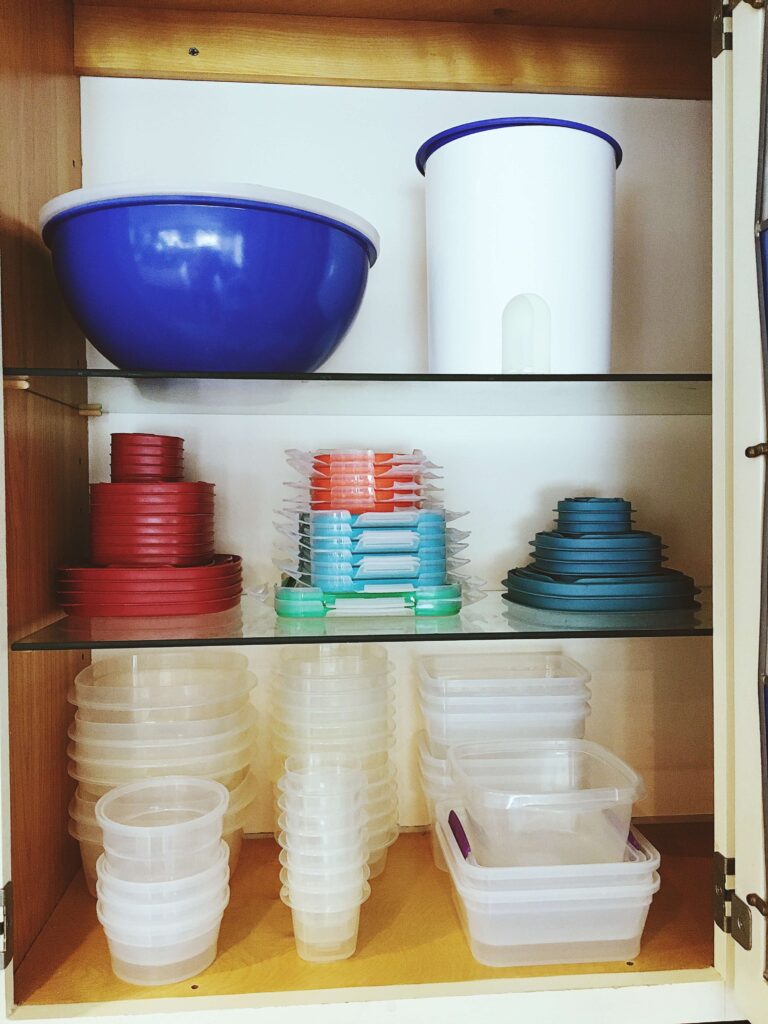
The top shelf consisted of the larger Tupperware containers with the lids sitting on top of them. We only did this for these containers because of the size and sets. These each have smaller bins sitting inside of them. Keeping the lids with these sets made them accessible.
Below that shelf went all the Tupperware lids. The lids stored on this shelf balanced out this space. It gave more breathing room and a better visual.
The bottom of the containers went on the bottom shelf. Organizing them like this allowed them to see all of the containers.
TUPPERWARE STORAGE MAINTENANCE
Setting up the system is one thing—keeping it that way is what makes the difference.
When food storage containers aren’t maintained, they tend to become one of the first areas to fall apart. The good news is, with a few simple habits, tupperware storage becomes easy to manage.
- Sort and Declutter: Regularly go through your Tupperware collection and declutter any containers or lids that are damaged, stained, or no longer used. This will help you free up space and ensure that everything you have is functional. Consider donating any excess Tupperware to minimize clutter.
- Labeling System: Implement a labeling system to keep track of your Tupperware. Use adhesive labels or a label maker to mark each container and its corresponding lid with a number or letter. Create a master list with the corresponding numbers or letters to easily match lids with containers. This will save you time and frustration when searching for the right lid.
- Stackable Storage: Invest in stackable Tupperware containers to maximize your cabinet space. Choose containers with lids that securely stack on top of one another, allowing you to utilize vertical space efficiently. Stackable Tupperware not only saves space but also helps keep your cabinets organized and clutter-free.
With a simple setup and occasional resets, this is one of those areas that can stay organized without a lot of effort.
FINAL THOUGHTS
With the right system in place, even the most frustrating cabinets can become easy to use.
When containers and lids are organized in a way that makes sense, everything is easier to find, put away, and maintain. It’s a simple shift that saves time and removes unnecessary friction from your day.
The result is a kitchen that feels more efficient, more functional, and much easier to live in.



+ show Comments
- Hide Comments
add a comment